
Family violence doesn’t stop for Christmas.
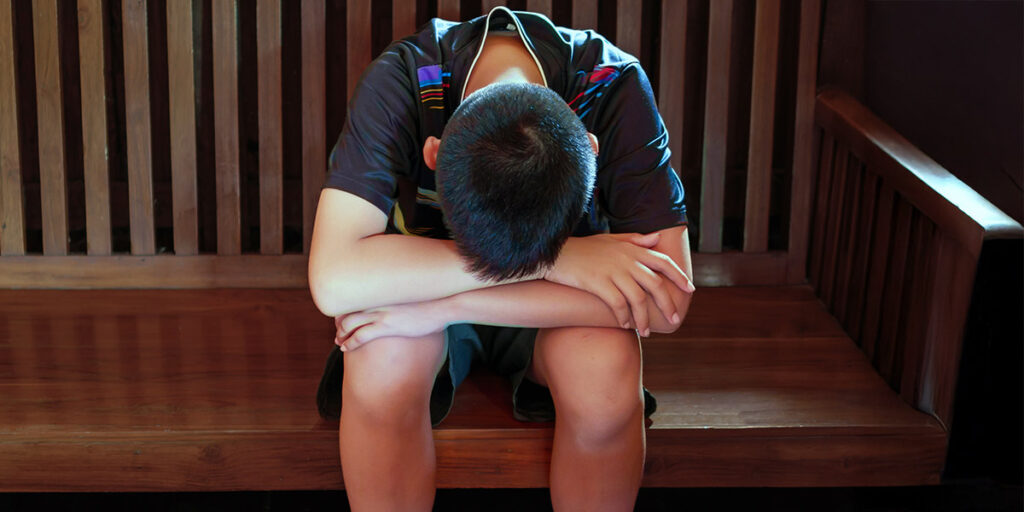
With family and sexual violence incidents set to soar over the Christmas period, urgent action is required to protect our tamariki says the Te Whare CEO.
For most of us, Christmas is a time of peace, love and joy. Yet, sadly, for many children, it’s the most terrifying time of the year – marked by neglect, abuse and fear. New Zealand has the highest rate of family and intimate partner violence in the developed world, with Police and frontline agencies reporting a sharp rise in incidents over the Christmas period.1
What’s more, it’s estimated that only about one-third of family violence cases are reported,2 meaning actual numbers could be much higher.
“Sadly, Christmas is often the time when family and sexual violence are at their worst,” says Elizabeth Walker, CEO of Te Whare Ruruhau o Meri Trust (Te Whare), a kaupapa Māori social services provider supporting families to overcome violence and restore whānau wellbeing. “It can be a time of immense pressure and stress for many whānau – and when alcohol or drug use increases, so too does the risk of harm and violence in the home. Tragically, this can mean tamariki are more neglected than ever.”
These seasonal pressures, combined with New Zealand’s persistently high rates of family violence, where on average, one child dies from family violence every five weeks3 , police attend a family violence episode every four minutes and children are present in nearly two-thirds of incidents4 , make the Christmas period an especially dangerous time for at-risk tamariki.
“As an organisation working on the frontline with vulnerable whānau, our team witnesses these statistics in action on a daily basis,” Walker continues. “Sadly, Māori are disproportionately affected by family and sexual violence, and tamariki and rangatahi even more so.”
Māori at higher risk of family and sexual violence
Māori suffer higher rates of sexual violence than any other ethnic group in Aotearoa (Ministry of Justice, 2023):
- Almost one in three Māori (31%) reported experiencing sexual violence in their lifetime.5
- 50% of Māori women have experienced physical or sexual violence.6
- Māori girls are twice as likely to experience child sexual abuse as non-Māori girls.7
- 37% of children who were found to be sexually abused in reports of concern to Oranga Tamariki between 2009 to 2012 were Māori.8
“These shocking statistics point to an urgent need for greater intervention and support over Christmas to protect at-risk tamariki,” says Walker. “While the Government’s Te Aorerekura Action Plan is a step in the right direction, family and sexual violence is so systemic in Aotearoa that an intentional, collaborative approach is needed to really shift the dial.”
To this end, Te Whare has initiated several collaborations with other agencies and social service providers to deepen their impact. These include partnerships with Nurturing Families, The Period Place, Rongopai House Community Trust, and Te Ahuru Mōwai Service (TAMS), an innovative initiative in Kaitaia delivering a wraparound, multi-agency approach to address family violence. The organisation also plays an integral role in Kia Ora Ake, a co-designed wellbeing service that supports tamariki, rangatahi and whānau in the Franklin area.
A powerful framework for change
“Through third-party research, we know our mahi is creating real impact,” says Walker. “One of the key success factors identified is our proprietary Te Kawa o te Marae framework, which integrates kaupapa Māori, Māori Christianity and mātauranga Māori. This combination provides a comprehensive framework that supports whānau to address personal challenges, understand the roots of violent behaviour and build safer, healthier relationships within their whānau.”
“However, creating true generational change requires more funding, more investment, more collaboration, and more outreach to those who are at risk,”
Walker reiterates. “To that end, we welcome discussions about opportunities to collaborate with other social services providers. When we walk alongside whānau together, we can create a powerful ripple effect across Aotearoa – not only at Christmas, but also for decades to come.”
About Te Whare Ruruhau o Meri Trust (Te Whare)
Te Whare delivers kaupapa Māori social work services and programmes on behalf of Te Hāhi Mihingare – the Māori Anglican Church. We provide a range of services to support whānau in Te Tai Tokerau and Tāmaki Makaurau, including
social work support, safety and non-violence programmes, tamariki hinengaro wellbeing initiatives, and in-school and advocacy services.
We walk alongside whānau through every stage of life, supporting them to navigate challenges, overcome family harm and violence, and restore whānau wellbeing.
About the Safer Tamariki Christmas Appeal
Te Whare has launched our inaugural ‘Safer Tamariki’ Christmas Appeal, encouraging New Zealanders to donate and help create safer, happier lives for at-risk tamariki. To learn more or to donate.
For media enquiries, please contact Elizabeth Walker, CEO, on 022 126 7587 or Elizabeth@tewhare.org.nz
Sources
1. RNZ, January 2024: https://www.rnz.co.nz/news/national/506755/police-refuges-busy-with-summer-spike-in-family-violence
2. https://goodshepherd.org.nz/publications/family-violence-and-economic-harm-statistics/
3. Child Matters: https://www.childmatters.org.nz/insights/nz-statistics/
4. https://www.police.govt.nz/sites/default/files/publications/annual-report-2020-2021.pdf (PDF)
5. https://helpauckland.org.nz/wp-content/uploads/Sexual-Abuse-Statistics-September-2023.pdf
6. https://www.rnz.co.nz/news/te-manu-korihi/442113/shocking-rate-of-violence-against-wahine-maori-report
7. Retrospective report from a random sample of 2,855 women aged 18–64 years old (Fanslow et al., 2007)
8. Te Puni Kōkiri – Ministry for Māori Development. (2017). Māori Family Violence Infographic.