
New research confirms Te Kawa o te Marae delivers meaningful outcomes for urban whānau
Independent research has found that Te Kawa o te Marae remains a powerful and effective framework for strengthening wellbeing, cultural identity, and positive change for whānau living in urban communities.
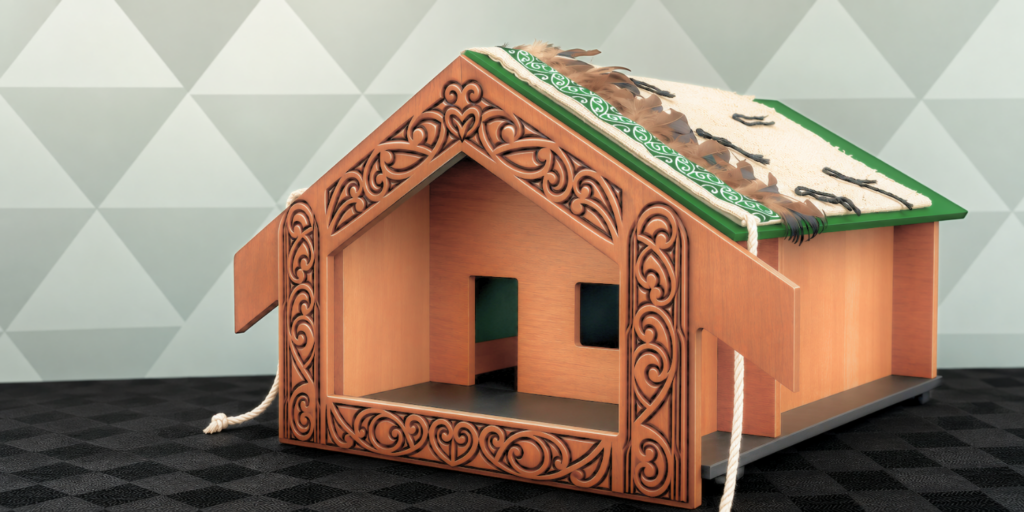
Te Kawa o te Marae is a unique kaupapa wellbeing framework that helps whānau understand the roots of harmful behaviours within themselves and others. It guides whānau towards positive behaviour change, using kaupapa Māori tools and resources to build a future free of violence. By using the whare as a model for whānau dynamics, this framework supports whānau in breaking free from unhealthy behaviours.
Commissioned by Te Whare Ruruhau o Meri and undertaken by the Kingi Ihaka Research Centre, the evaluation examined the urban delivery of Te Kawa o te Marae in Tāmaki Makaurau and found that tikanga-based frameworks can be successfully adapted to urban environments without compromising cultural integrity or intent.
The study found that kaupapa Māori approaches grounded in manaakitanga, whanaungatanga, rangatiratanga, and kaitiakitanga contribute to greater self-awareness, stronger relationships, increased cultural connection, and improved outcomes for whānau.
Tāhuhu | Chief Executive Elizabeth Walker says the findings provide important independent validation of a kaupapa that has long sat at the heart of Te Whare walking alongside whānau.
“This research confirms what we have seen through years of practice and experience. Te Kawa o te Marae provides a strong cultural foundation that supports healing, growth, accountability, and connection for whānau. Importantly, it shows that tikanga Māori can be authentically upheld in urban settings while continuing to achieve meaningful outcomes.”
The report, Te Kawa o Te Marae: Urban Delivery Evaluation – Assessing Effectiveness, Cultural Alignment, and Whānau Impact in Tāmaki Makaurau, was completed in January 2026 by researchers Ven Katene Eruera and Revd Dr Paul Reynolds of the Kingi Ihaka Research Centre. The evaluation assessed the effectiveness of Te Kawa o te Marae within urban environments and explored its impact on participants, whānau, and service delivery.
Key findings identified Te Kawa o te Marae as a critical framework for maintaining cultural integrity, identity, and relational practice. Participants reported increased feelings of belonging, cultural safety, trust, and connection, while the application of marae-based principles was linked to more holistic outcomes for whānau.
The research also highlighted the importance of strong cultural leadership and ongoing capability development to ensure tikanga remains deeply embedded in practice. Researchers noted that the success of urban delivery relies on organisations maintaining clarity of purpose and a commitment to authentic kaupapa Māori approaches.
Among the opportunities identified were the continued integration of research findings into service design, strategic planning, stakeholder engagement, and advocacy for funding models that better align with kaupapa Māori frameworks.
Elizabeth Walker says the findings have significance beyond Te Whare Ruruhau o Meri.
“The report demonstrates that culturally grounded, whānau-centred approaches are not only relevant in today’s urban environment, but they are also essential. It provides valuable evidence for organisations, funders, and decision-makers seeking effective ways to strengthen whānau wellbeing and achieve lasting positive change.”
Te Whare Ruruhau o Meri welcomes the release of the research and acknowledges the contribution of the Kingi Ihaka Research Centre, participants, facilitators, and whānau who shared their experiences throughout the evaluation.
Media Contact
Erin Rangi-Watt
Corporate Services Manager
Te Whare Ruruhau o Meri
022 499 7321